
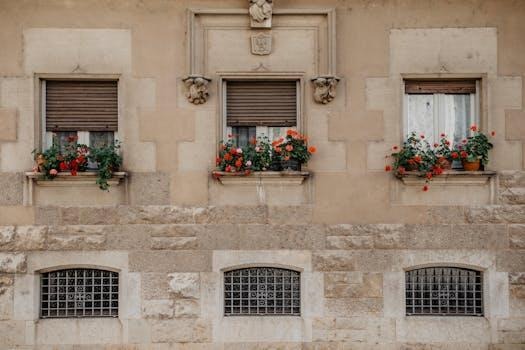
Public space never arrives as a blank canvas. Concrete, steel, and brick write the first draft. People only edit. A bench pulls bodies into a queue of strangers. A bollard quietly indicates to a child where the pavement ends and danger begins. The geometry of a plaza can invite protest or smother it with awkward angles. Architects like to pretend that intention rules everything. In truth, habits, shortcuts, and small rebellions push back against every column, ramp, and railing that tries to dictate behaviour, often rewriting the brief overnight with stubborn, improvised strokes.
Walls That Pretend to Be Neutral
A wall never just holds back soil. It edits desire. Modern retaining wall systems do more than stop a hillside from sliding into a car park. They slice movement, frame sightlines, and announce who belongs on which side. A low stepped wall becomes illegal stadium seating beside a ring road. A tall blank one kills a street, turning shoppers into hurried ghosts. Once a council installs a wall, the budget freezes it for decades. Habit freezes faster. People become familiar with the boundaries and seldom venture beyond them, unless a protest disrupts the established order.
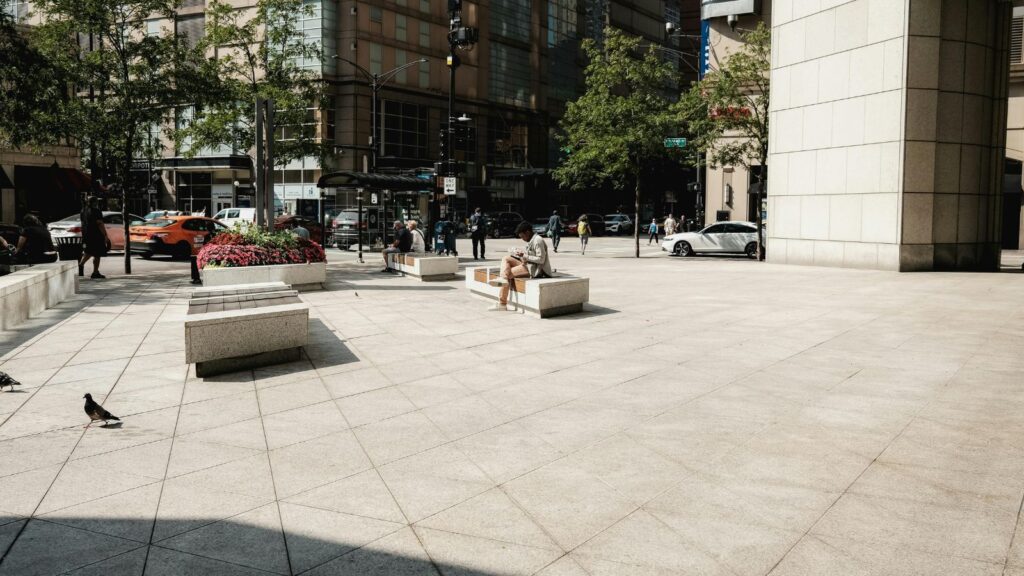
Benches, Bodies and Unwanted Loitering
The humble bench functions as the moral lecture of the high street. Long, flat, backless benches whisper that pausing is fine as long as nobody lies down. Spiky armrests appear when a city grows nervous about rough sleepers. The seat becomes a weapon wrapped in stainless steel. Teenagers still gather. They simply spill onto kerbs and shop entrances instead. Designers obsess over comfort, yet social rules grow from spacing. Two metres of wood makes strangers sit apart. One short perch forces knees and opinions closer than planners expect; arguments then arise and rumours spread.
Steps, Ramps And Quiet Segregation
Stairs feel innocent. A proud civic staircase flatters a city’s ego. It photographs well. It also quietly sorts bodies. Anyone with a buggy, wheelchair, or weak lungs is redirected to the side, often through a service entrance that smells of waste. A ramp that zigzags like a bored snake announces that inclusion is a chore. When level changes shrink, something odd happens. People linger longer. Children run loops. Skaters arrive. The smallest gradient determines whether a square becomes a stage, a passageway, or a shortcut bypass.
Columns, Shade And Informal Ownership
Structural columns look dull on drawings. Out in the street, they behave like social magnets. A colonnade breaks the wind, catches shade, and carves thin rooms into a pavement. Traders slide in first with crates of fruit. Smokers and gossipers follow. Suddenly, the public edge of a private building feels borrowed, almost claimed. Police dislike this limbo. Owners install lights, cameras, and hostile spikes on ledges. The columns stay. Their rhythm still offers micro-shelters where strangers cluster, shielded from traffic, watched from windows, half tolerated, half resented, yet always quietly persistent.
Closing Remarks
Structural elements speak a blunt language. Raised edge. Do not cross. Narrow gap. Keep moving. Deep recess. Hide here. Engineers worry about load paths. Politicians talk about vibrancy. Residents read the actual script written in concrete every day with their feet. Shift a kerb by thirty centimetres and a desired line vanishes. If you include a canopy, a market emerges effortlessly. Public space policy loves slogans about inclusion. The real work occurs in sections, details, and junctions, where behaviour quietly hardens into habit, then becomes accepted history and local folklore.