
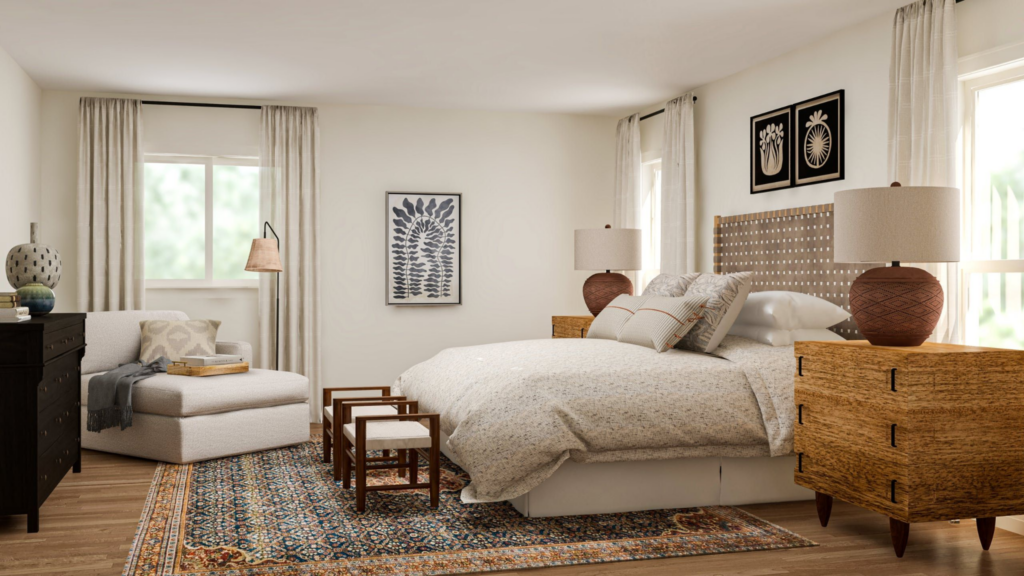
A guest room should do more than give someone a place to sleep. It should give them a small sense of ease. After a long drive, a late flight, or even a busy family gathering downstairs, your guest should be able to close the door and feel like they have their own quiet corner of the house.
That doesn’t mean the room has to look like a boutique hotel. Honestly, some guest rooms that try too hard end up feeling cold. The better goal is comfort with a bit of polish. Clean sheets, soft lighting, a chair that isn’t just decorative, enough storage, and a little privacy can change the whole mood.
Here’s the thing: people notice small details. They notice where they can put their bag. They notice whether the bedside lamp is easy to reach. They notice if there’s a place to sit that isn’t the bed. And yes, they notice when the room feels like a storage closet with a mattress squeezed into it.
Start With The Bed, But Don’t Stop There
The bed is the anchor of any guest room, so start there. A comfortable mattress, clean bedding, and good pillows do most of the heavy lifting. You don’t need the most expensive setup, but you do need bedding that feels fresh and intentional.
Layering helps. A fitted sheet, flat sheet, duvet, and an extra blanket give guests choices. Some people run cold. Some people sleep hot. Some people need three pillows and a blanket tucked around their feet like they’re preparing for winter. Let them manage their own comfort without needing to ask.
Stick with breathable fabrics when possible. Cotton, linen blends, and soft quilts work well because they feel relaxed but still put-together. Avoid overly stiff bedding that looks nice in photos but feels like sleeping inside a gift box.
A small bench at the foot of the bed also helps. Guests can use it for luggage, shoes, or folded clothes. It keeps bags off the floor and saves the bed from becoming the only surface in the room.
Give Them A Place To Sit That Isn’t The Bed
You know what makes a guest room feel more private? A real place to sit. Not a tiny chair shoved into a corner for decoration, but a seat someone can use to read, scroll, put on shoes, or drink coffee in the morning.
This is especially useful for long-term visitors. When someone stays for more than a night or two, they need a room that works beyond sleep. A supportive chair or recliner gives them a way to relax without feeling like they have to lie down every time they want a quiet moment.
If space allows, add a compact recliner near a window or beside a small table. For homeowners looking for better seating options, browsing trusted Himolla furniture dealers can be a practical place to start, especially if comfort, support, and a more refined look matter in the room.
Keep the seating area simple. A chair, a small side table, and a lamp are enough. Add a throw blanket if the room tends to feel cool. Suddenly, that empty corner becomes a reading nook, a phone-call spot, or a quiet place to breathe before joining everyone downstairs again.
Lighting Sets The Mood Faster Than Decor
Lighting can make a room feel warm or harsh in about two seconds. A single bright ceiling light usually isn’t enough. It works for cleaning the room, sure, but it doesn’t help a guest wind down at night.
Add lighting in layers. A bedside lamp is a must. Two lamps are better if the bed has two sides. A floor lamp near a chair creates a soft reading area. A nightlight in the hallway or bathroom helps guests move around without fumbling in the dark.
Warm bulbs usually work best in guest rooms. They make the space feel calm instead of clinical. Bright white bulbs can feel a bit like an office or a waiting room, and nobody wants that energy when they’re trying to sleep.
Also, think about switches. Can guests turn off the light from bed? Can they reach the lamp without knocking over a water glass? These things sound small, but they matter. Good design often comes down to what feels easy.
Add Storage Without Making It Feel Empty
A guest room doesn’t need a full walk-in closet, but it should offer enough storage for someone to unpack a little. Even short-term guests appreciate a few hangers, an empty drawer, or a luggage rack.
Try to leave part of the closet open. If the closet is packed with holiday décor, old coats, and mystery boxes from five years ago, guests will feel like they’re borrowing space from your clutter. Clear at least one section. Add matching hangers if you have them. It’s a small touch, but it feels thoughtful.
A small dresser works well too. If the room is tight, use a nightstand with drawers or a storage bench. Wall hooks are another easy win. Guests can hang bags, jackets, robes, or towels without draping them over chairs.
And don’t forget surfaces. A guest room needs a place for a phone, watch, book, glasses, and maybe a cup of tea. People travel with stuff. Give the stuff somewhere to land.
Privacy Makes The Room Feel Like A Retreat
A private retreat doesn’t need to be silent, but it should give guests a sense of control. Window coverings are a big part of that. Sheer curtains look pretty, but they don’t always block light or views. Pair them with blackout curtains or shades so guests can sleep later if they want.
A mirror is helpful too, especially if the bathroom is shared. Guests can get ready without taking over the sink area. A full-length mirror is ideal, but even a medium wall mirror helps.
Sound also matters. You don’t need studio-level acoustics, but you can soften noise with rugs, curtains, upholstered furniture, and fabric headboards. Hard floors and bare walls bounce sound around, while soft materials absorb it. Think of it like adding cushions to the room’s personality.
For extra comfort, place a small fan or white noise machine in the room. Some guests need airflow. Others sleep better with a steady background hum. It’s one of those things people rarely ask for but often appreciate.
Bring In Small Details That Feel Personal, Not Fussy
The best guest rooms feel prepared, not staged. There’s a difference. A staged room says, “Please don’t touch anything.” A prepared room says, “You’re welcome here.”
Add a carafe or bottled water, a small tray, tissues, and a phone charger if you have an extra. Leave a few books or magazines, but don’t overthink the selection. A local guidebook, a design magazine, or a light novel works fine.
Fresh flowers are lovely, but they’re not always practical. Some people have allergies. A low-maintenance plant can be better. A small vase with greenery, eucalyptus, or even dried stems adds life without making the room feel too dressed up.
Scent is tricky. A lightly fresh room is good. A heavily perfumed room is not. Skip strong candles and plug-ins. Clean fabric, fresh air, and a mild linen spray do the job without overwhelming anyone.
It’s also smart to include the Wi-Fi name and password on a small card. Nobody wants to ask for it while balancing a suitcase and pretending they don’t need to check email.
Think Like A Host, Not A Hotel Manager
A guest room doesn’t need to copy a hotel. In fact, it’s better when it doesn’t. The charm of staying in someone’s home is that it feels personal. But that personal feeling should come with comfort and a little order.
Before guests arrive, spend ten minutes in the room as if you were staying there. Sit on the bed. Turn on the lamp. Try opening the drawer. Look for an outlet. Is there somewhere to charge your phone? Is the room too cold? Is the chair comfortable? This quick test shows you what’s missing.
Hospitality is really about reducing friction. Guests shouldn’t have to ask for every little thing. They shouldn’t feel like they’re invading your space. They should feel expected, even if the room is small.
That same idea applies beyond the home, too. Event spaces, especially wedding venues, rely on comfort, mood, and clear communication to help guests feel cared for. Many venues now use thoughtful content and services to show couples what the experience feels like before they ever visit in person. It’s a quiet reminder that hospitality starts before someone walks through the door.
The Real Goal Is Ease
A guest room becomes a private retreat when it gives people ease. Not perfection. Ease.
A good bed helps. A proper chair helps. Soft lighting, storage, privacy, and simple details all work together. None of these choices need to be flashy. In fact, the best rooms often feel calm because nothing is shouting for attention.
Your guests may not comment on every detail. They probably won’t mention the extra hangers or the soft lamp by the bed. But they’ll feel the difference. They’ll sleep better, settle in faster, and feel less like visitors and more like people you genuinely wanted to welcome.
And really, that’s the whole point.