
Many homeowners spend a lot of time finalizing fence designs, but the material often decides how well that fence performs over the years. A fence that looks strong on day one may not hold up the same way without the right material behind it. That is why understanding metal options becomes important before making a final decision.
If you are exploring fence and gate, metal choices such as aluminium, steel, and wrought iron each bring different strengths. Knowing how they behave in real conditions helps you choose a solution that fits your space without creating unnecessary maintenance later.
Understanding Why Metal Fencing Stands Out
Metal is often preferred because it balances structure with simplicity. Unlike some materials that change shape or weaken over time, metal fencing holds its form well when installed correctly.
Another reason people consider metal is its ability to work across different layouts. Open spaces, sloped land or compact areas can all be managed with the right design. This flexibility makes metal a common feature in many modern yard fencing ideas, especially where both visibility and boundary definition are required.
Aluminium Fencing And Its Everyday Practicality
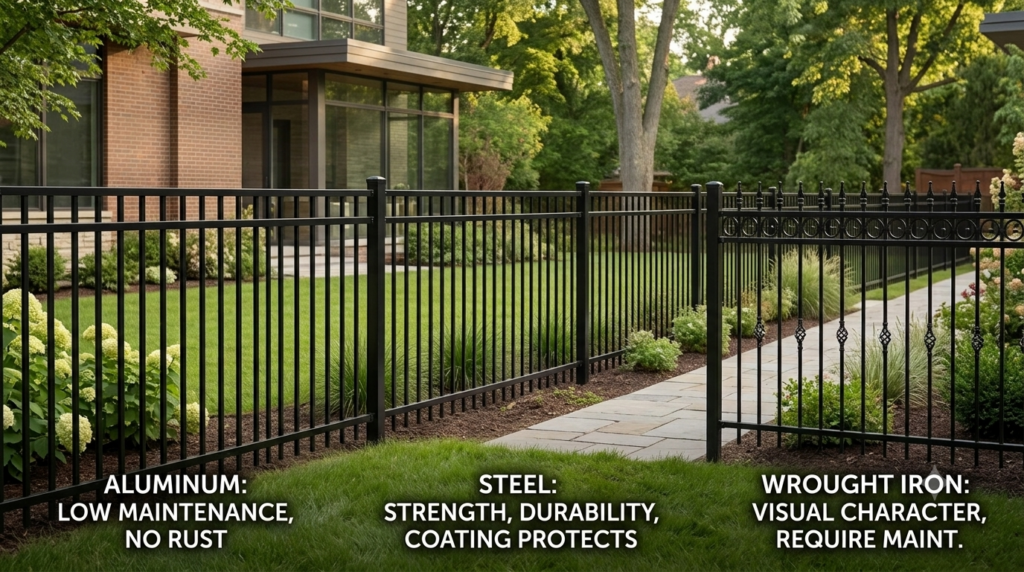
Aluminium is often chosen for its ease of use and minimal upkeep. It is lighter than other metals, which makes installation more manageable and less time-consuming. One of the main advantages of aluminium is that it does not rust easily.
This makes it suitable for areas with changing weather conditions, where moisture may affect other materials. For homeowners who prefer a simple maintenance routine, aluminium offers a practical solution.
In terms of appearance, aluminium fits well into clean and modern yard fencing ideas. It provides a neat finish while allowing you to maintain visibility across the yard. While it may not offer the same level of strength as steel, it performs well for standard yard fencing needs.
Steel Fencing And Its Structural Strength
Steel is known for its durability and ability to handle pressure over time. It is often selected when strength becomes a priority, especially in areas where the fence may face frequent use or external impact.
Compared to aluminium, steel is heavier and requires a more stable installation process. When treated with protective coatings, it can resist corrosion and maintain its condition for longer periods.
Steel works well in metal fencing systems where stability is important. It also adapts well to uneven ground, which makes it a suitable option for properties with varied terrain. This combination of strength and adaptability makes steel a dependable choice in many situations.
Wrought Iron Fencing and Its Visual Character
Wrought iron is often associated with decorative fencing. It offers a distinct appearance that adds depth and character to a property without relying on complex materials. This material is strong and durable, offering long-term protection. However, it does require attention over time. Regular maintenance, such as cleaning and protective coatings, helps prevent rust and keeps the surface in good condition.
For homeowners exploring detailed yard fencing ideas, wrought iron provides flexibility in design. Patterns, curves, and custom shapes can be added to match the surrounding environment. It is often chosen when appearance plays an important role alongside function.
Comparing Maintenance And Long-Term Performance
Each metal option behaves differently depending on how it is used and maintained. Acknowledging these fundamental differences helps individuals avoid unexpected issues in the long run. Here are a few critical factors that cannot be overlooked by homeowners –
Aluminium requires minimal upkeep. The material remains stable in most weather conditions.
On the other hand, steel offers additional strength due to its robust nature. However, the material benefits from protective coatings to maintain its surface. Wrought iron provides a strong structure but needs regular care to preserve its finish.
When planning yard fencing, it is important to consider how much time you are willing to invest in maintenance. A material that fits your routine will perform more consistently over time.
Matching Metal Fencing With Your Space
A fence should support how you use your space rather than restrict it. Generally, metal fencing works well in areas where you want to maintain a sense of openness while still defining boundaries.
Aluminium supports a clean and simple look, steel adds a sense of strength, and wrought iron brings a more detailed visual style. Choosing the right option depends on how you want the space to feel and function daily. Be sure to connect with experts to gain more detailed knowledge about this intricate topic.
When selecting metal fencing, it helps to think about how the fence interacts with the surrounding environment. A well-matched choice creates balance without requiring constant adjustments. Expert professionals can help streamline this aspect.
https://fortressbp.com/blog/475/how-to-choose-the-type-and-material-for-your-yard-fence