
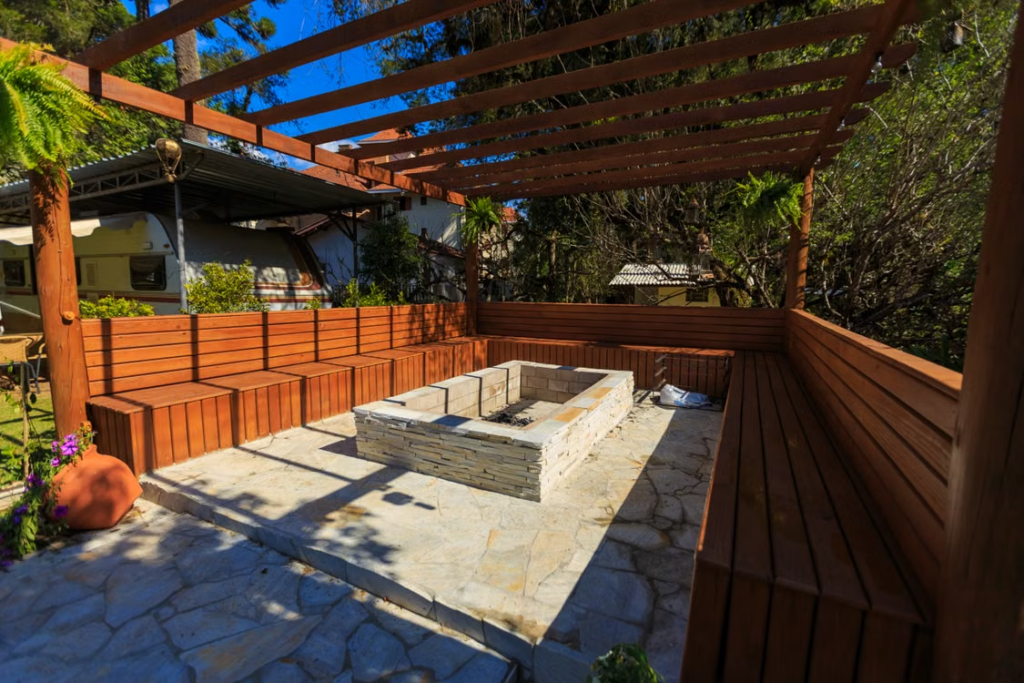
Want a backyard space you actually use every single day?
Your pergola can transform your ordinary patio into the favorite “room” of your home. With proper planning, a custom pergola design will provide you with:
- Shade when the sun is at its worst
- A place to eat, relax and host friends
- A big boost to your home’s curb appeal.
You’re not alone. Shading additions were included by 20% of renovating homeowners in 2024, and that number jumped to 35% this year.
More shade = More time outside.
Here’s the problem:
Most folks choose a pergola in the same way they choose a garden chair. They like the look of one, buy it and hope for the best.
If a pergola isn’t sized correctly for your yard, it just becomes an expensive stack of boards.
Learn about styles, materials and layout tips in this how-to guide.
Here’s how to do it…
Inside this guide:
- What Is Custom Pergola Design?
- The 4x Most Popular Pergola Styles
- How To Choose The Right Pergola Materials
- Layout Tips For The Perfect Pergola
What Is Custom Pergola Design?
Custom pergola design means designing your pergola around your space, your style and your lifestyle. You don’t force your yard into a kit, you mold your pergola around it.
That means you choose the:
- Size: based on the furniture and people it needs to hold.
- Style: so it matches the look of your home.
- Materials: that suit your climate and your budget.
Pretty simple, right?
Of course, getting every little detail correct can be difficult. Posts require appropriate footings. Beams must have the proper span. The roof must resist wind, sun and possibly snow. That’s part of the reason why so many homeowners choose to hand their custom pergola build over to experienced US pergola builders who can ensure the style, materials, and layout will fit the dimensions of their yard perfectly. In fact, Houzz reports that 71% of homeowners hire a professional for their outdoor projects now, which is a new high.
The 4x Most Popular Pergola Styles
One size does not fit all when it comes to pergolas. A great custom pergola design looks like it was always meant to be in your yard.
Here are the four styles homeowners choose most often…
Modern Pergolas
Contemporary pergolas are more streamlined and simple. This includes straight lines, flat roofs, and geometric shapes. Color options often consist of black, grey or white metals.
This method works best on newer houses, concrete patios and simple gardens. Take it to the next level by installing hidden LED lighting underneath the beams.
Traditional Pergolas
Think big wooden posts, decorative rafter tails and climbing plants.
Classic pergolas have an earthy appeal. They look amazing paired with farmhouse, craftsman or cottage-style homes. Plus they age beautifully with vines such as wisteria or grapes growing across the top.
Attached Pergolas
A Pergola That Attaches To Your House has one side that connects to your home. One end of the pergola is attached to a ledger board that’s mounted to your home… The opposite end of the pergola are pergola posts.
This is a great option if you need shade for a back door or a kitchen window or patio that is right off the house. It creates indoor-outdoor living that flows together. Winner winner chicken dinner.
Louvered Pergolas
Louvered pergolas feature roof slats that can open and close. Some are operated manually. Others are automated with a remote or app.
The perk of choosing them: you decide what color they are. Open them up for morning sunlight streaming through, close them when it pours. They’re the most versatile style available (though also one of the most expensive).
How To Choose The Right Pergola Materials
Your material choice affects three big things:
- How your pergola looks
- How long it lasts
- How much work it takes to maintain
Wood remains the clear favorite. Industry statistics predict wood will hold 56.7% of the market for outdoor living structures in 2026.
But popular doesn’t always mean best for you. Take a closer look…
Wood
Cedar and redwood are traditional choices. They appear natural, smell wonderful and are more resistant to insects than most woods.
The downside? Wood will need to be sealed/stained every few years to prevent cracking/fading/rotting.
Aluminium
Aluminium is lightweight, durable and corrosion-resistant. Most aluminium pergolas are finished with a powder-coat, meaning they typically require zero maintenance.
Vinyl
Vinyl requires less maintenance than other materials. It does not rot, peel or need to be painted. Cleaning vinyl siding is as easy as washing it with soap and water.
Keep in mind though… colours are limited and it can appear less “premium” than wood/metal.
Pergola Materials Compared
Truthfully, you really can’t go wrong with either. It just depends on your weather conditions, price range and how much maintenance you don’t mind.
|
|
Wood |
Aluminium |
Vinyl |
|
Look |
Warm, natural feeling |
Sleek and modern |
Clean/simple |
|
Maintenance |
High |
Low |
Very low |
|
Upfront Cost |
Wood Type Dependent |
Medium / high |
Medium |
|
Best For |
Traditional homes |
Modern homes & louvered roofs |
Busy homeowners |
Layout Tips For The Perfect Pergola
A pretty pergola doing nothing but sitting in the wrong place is a pergola wasted. Every pergola design starts with a functional layout.
Before you build, walk through these layout tips…
Start With How You’ll Use It
What will you do under your pergola? Eat? Lounge? Cook?
Lounge areas are currently the most popular outdoor living space, included in 83% of backyard renovations. So consider furniture first. A six person dining table requires much more space than two lounge chairs.
Tip: Allow at least 3 feet between furniture and walkways so that people don’t feel cramped.
Follow The Sun
Survey your yard throughout an entire day before deciding where to place one. Take note of where the afternoon sun strikes as you’ll need shade from this time the most.
Here’s something to consider: If your pergola provides shade on the lawn but keeps your chairs sunny, it’s missing the point.
Get The Height Right
The average pergola height ranges from 8 to 10 feet. Too low and it’s oppressive. Too high and there isn’t much shade.
(There’s that “shade first” rule in action again.)
Disclaimer: Check with your local building codes and HOA regulations before constructing. Many areas require a permit if the structure is above a certain size.
Tying It All Together
A great pergola doesn’t happen by accident.
To quickly recap:
- Pick a style that matches your home
- Choose materials that suit your climate and budget
- Plan the layout around how you’ll actually use the space
- Follow the sun before you set a single post
Master these and you’ll have a pergola design that will provide you with shade, style and an outdoor living space you’ll enjoy for decades.