
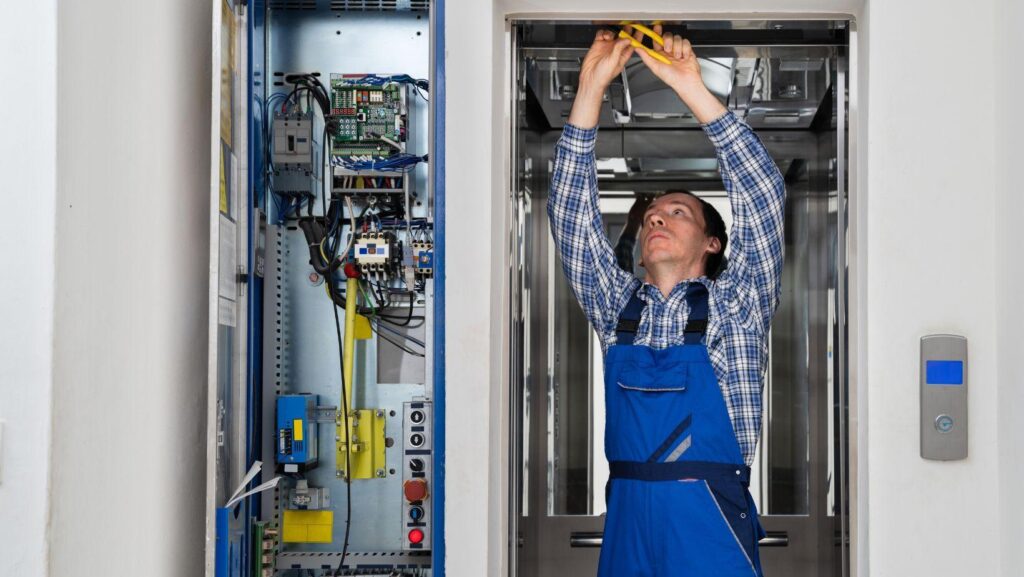
In the United States, and more likely even beyond, some trades get less attention than others, which often means you have to look harder for reliable advice on building a career in them. Elevator mechanics is a good example. It is a highly specialised trade that combines mechanical work, electrical systems, hydraulics, problem-solving, and an unusually strong focus on safety.
Thankfully, this is a career that allows you to learn while earning, so it is worth the effort. But how do you get in? Check out the following tips.
1. Be Strategic When Learning From Others
Many aspiring elevator mechanics will agree when we say that an apprenticeship is the central route into this trade. The U.S. Bureau of Labour Statistics says that nearly all workers in this occupation learn through an apprenticeship, with typical programmes lasting an average of four years. These programmes also combine technical instruction with paid on-the-job training.
And even after training, taking your exam and becoming licensed, you will also have to take approved elevator continuing education from top-rated providers like RocketCert to keep your knowledge and skills sharp. That’s a lot of learning for one person, and a very good reason to approach it strategically.
The best way to do this is to find courses and apprenticeships through extensive research. The best mechanics to work under will be those who take their time to answer all your questions and allow you to gain as much hands-on experience as possible. If need be, you can always change your mentor if they don’t provide much value during the training.
2. Don’t Downplay the Importance of Mathematics and Physics
No, you won’t need to be a mathematician to work on elevators, but being comfortable with practical mathematics and physics always makes the trade a lot easier. You specifically need mathematics, mechanical drawing, and physics as the core subjects that will be useful in your preparation for this occupation.
This is because you will encounter measurements, forces, loads, and other important elements that affect the decisions you make in this field. And even if mathematics wasn’t your strongest subject in school, there is always an alternative. In this case, you can start strengthening the practical areas you are likely to encounter. When you see how these subjects are applied in this profession, it becomes a tad easier to understand the theory.
3. Work With Your Mechanic, Rather Than Just Under Them
You will spend most of your time early in your career learning from experienced mechanics. Avoid the temptation to measure your progress by how many tasks you can complete by yourself. Instead, focus more on watching how experienced mechanics organise their tools, communicate with different teams, diagnose faults, and prepare before starting a job.
Such observations teach you a lot more than you will ever learn from any course or classroom session. They also help you learn more about how experienced mechanics think, so that you can create reliable ways for solving any problems you face.
Not to say that you should ignore the knowledge from your classroom lessons. Far from it. You’ll actually want to work under the close supervision of an experienced elevator mechanic while applying classroom knowledge.
4. Prioritise Safety Mindset Over Confidence
Confidence is useful in any dangerous trade like elevator mechanics, but not to the point where negligence starts to show up. Reaching such a point means you’ve allowed overconfidence to take over, and that’s quite dangerous. Remember, elevator mechanics often have to work in shafts, machine rooms, confined spaces and other areas that carry considerable risk. That’s why safety should become inherent in how you work, rather than something you do because your supervisors demand it.
So take OSHA recommendations seriously and learn to pause when something doesn’t look right. Also, avoid taking risks if you don’t fully understand an instruction. You might feel like seeking clarification from your superiors or team members makes you look less qualified, but in reality it shows you are a professional in what you do. Besides, good mechanics know how to fix equipment, but the best know when a risk isn’t worth taking.
Optimise Your Learning for Maximum Success Today
Becoming an elevator mechanic is a great choice if you love practical work but are also interested in a profession that demands serious technical thinking. It will help more if you are curious about why things work the way they do, but most importantly, be disciplined enough to take safety procedures seriously.
And what better way to learn more about what this career demands of you than by investing in courses written by experts who have excelled in this field? That’s why you want to check out rocketcert.com, so you’ll learn as much as you can regarding this career before you even become an apprentice.